Key Takeaways
- Esthetician vs aesthetic nurse is a choice between two distinct professions, not two levels of one. The esthetician is licensed by the Florida Board of Cosmetology; the aesthetic nurse is licensed by the Florida Board of Nursing. Neither license converts into the other.
- The dividing line is the skin barrier. Estheticians work on it, nurses may work through it under delegation. Every difference in pay, autonomy, and ceiling traces back to that one boundary.
- Time and cost diverge sharply. Florida Statute 477.0132 registers a facial specialist at 220 statutory hours, while the nursing route runs an associate or bachelor degree plus the NCLEX-RN, then aesthetic training on top.
- The nurse ceiling is materially higher, but it is not automatic. An injector who cannot fill a schedule earns less than a booked esthetician with a loyal clientele.
- You can start as an esthetician and move to nursing later. Plenty do. The reverse move is rare, and the two credentials stack usefully for anyone aiming at medical direction or ownership.
The esthetician vs aesthetic nurse question is decided by two separate boards, not by one career ladder.
The two licenses come from different boards, and the boundary between them is the skin barrier.
The esthetician vs aesthetic nurse question usually arrives phrased as a hierarchy: which one is the higher version of the job. That framing is the first thing to drop. These are two separate professions with separate statutes, separate boards, separate exams, and separate liability. One is not a promotion from the other.
What they share is a workplace. In a Florida med spa both roles stand in adjacent rooms, and patients frequently cannot tell them apart. That proximity is exactly why the comparison gets muddled and why choosing wrong is expensive, because the licensing investment is measured in years on one side and months on the other.
Here is the honest comparison, starting with the only difference that actually matters.
What is the core difference between an esthetician and an aesthetic nurse?
An esthetician works on the surface of the skin. A nurse may work through it. That is the whole boundary, and everything downstream follows from it.
If the job ad says cosmetic injector, our guide explains what that title means and which license can hold it in Florida. And if you are already a nurse deciding how far to go, our side by side of the aesthetic RN and aesthetic NP paths in Florida covers scope, pay and hireability.
Estheticians perform facials, chemical exfoliation within permitted depth, extractions, dermaplaning, and skin analysis. They build treatment plans and manage home care. They also hold the client relationship, often for years. What they may not do is penetrate the living layers of the skin. That puts injectables, peels reaching the papillary or reticular dermis, and ablative or Class IIIb and IV lasers outside the scope, whatever extra certificate someone holds. Those devices fall under the Florida Administrative Code chapter 64B8-56 rules on laser and light based device use. Low energy non invasive modalities such as LED and superficial cosmetic ultrasound do remain permitted in the esthetics room, so the line is depth and energy class rather than technology as a category.
Aesthetic nurses hold a nursing license and work under physician delegation. They inject neurotoxin and filler and run device treatments where the practice protocol and training allow. They also recognize and escalate adverse events. Diagnosis and prescribing stay with the physician or advanced practice provider. But consensus protocols in aesthetic medicine expect the injecting nurse to begin high dose hyaluronidase immediately, under standing orders, on suspicion of ischemia. The window that decides the outcome is measured in minutes. Crucially, that authority is not independent, as we explain in our breakdown of what an aesthetic registered nurse can and cannot legally do in Florida under delegation.
A useful reality check: the nurse does not have unlimited authority either. The good faith exam must be performed by a physician, physician assistant, or advanced practice registered nurse before injectables, a requirement covered in our guide to the good faith exam Florida med spas must complete before injectables and comparable treatments. The nurse operates in a wider lane than the esthetician, not an unbounded one.
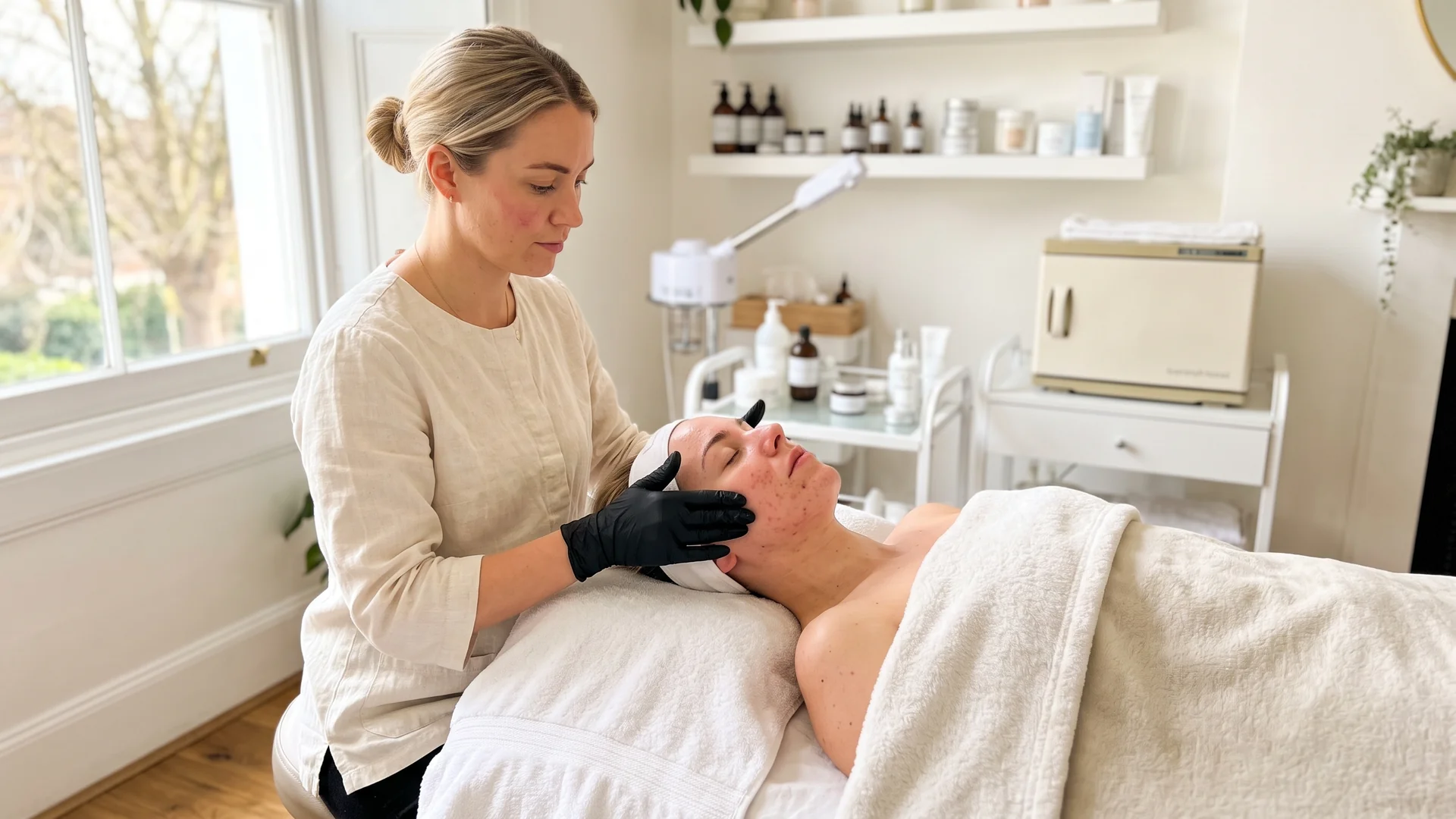
The esthetician works on the surface of the skin. That boundary sets everything downstream.
Esthetician vs aesthetic nurse: which license takes longer and costs more?
This is where the two paths stop resembling each other. Florida does not issue a general esthetician license at all. The Florida Board of Cosmetology, which administers every skin care credential in the state registers a facial specialist instead, a wrinkle we unpack in our explanation of what a licensed esthetician is and why Florida registers a facial specialist instead. The state registers a facial specialist at 220 statutory hours, which most programs complete in three to six months.
Nursing is a degree. An associate program runs roughly two years and a bachelor program four. Both end with the NCLEX-RN, and licensure itself is governed by section 464.008 of the Florida Statutes, which sets the education and examination requirements for nurse licensure. Only after licensure does aesthetic training begin, and injectable competence is built through supervised volume rather than a course. Realistically you are three to five years from your first independent injection day, and the full sequence is mapped in our step by step guide to becoming a nurse injector in Florida from licensure through supervised training.
| Factor | Esthetician (FL facial specialist) | Aesthetic nurse (RN) |
|---|---|---|
| Licensing board | Florida Board of Cosmetology | Florida Board of Nursing |
| Statutory hours or degree | 220 hours | ADN or BSN degree, then NCLEX-RN |
| Typical time to license | 3 to 6 months | 2 to 4 years, plus aesthetic training |
| Relative program cost | Low, typically a few thousand dollars | High, degree tuition |
| May inject neurotoxin or filler | No | Yes, under delegation and protocol |
| May perform the good faith exam | No | No, that requires MD, PA, or APRN |
| Works through the skin barrier | No | Yes, within delegated scope |
| Owns the client relationship | Typically yes, over years | Often yes, tied to results |
| Portability outside aesthetics | Limited to skincare settings | High, the nursing license travels |
| Realistic ceiling | Higher with ownership or specialization | Higher on wages, especially with volume |
Who earns more, an esthetician or an aesthetic nurse?
The nurse, on wages, and it is not close at the median. But the interesting comparison is not the median, it is what happens at the top of each path.
Injectable compensation frequently includes commission on product and treatment, which means a nurse with a full book earns very differently from a nurse whose schedule has gaps. The mechanics of that, and why the structure matters more than the base, are covered in our breakdown of how Florida med spa commission structures actually pay out across service and product revenue. Current Florida numbers by setting and experience live in our Florida aesthetic nurse salary report broken out by setting, experience, and compensation structure.
On the esthetician side, the ceiling is real but it is reached differently. It comes from retail attachment, retention, specialization into a niche the market pays a premium for, and eventually from room rental or ownership. The Florida ranges are in our Florida esthetician salary data covering spa, medical, and independent practice settings, and the medical setting premium specifically in our medical esthetician salary breakdown showing what the clinical setting adds over traditional spa work.
The honest summary is short. The nursing path raises both the floor and the ceiling of employed wages. The esthetician path keeps a lower wage ceiling, but offers a shorter and cheaper runway, and a faster route to owning the client relationship outright.
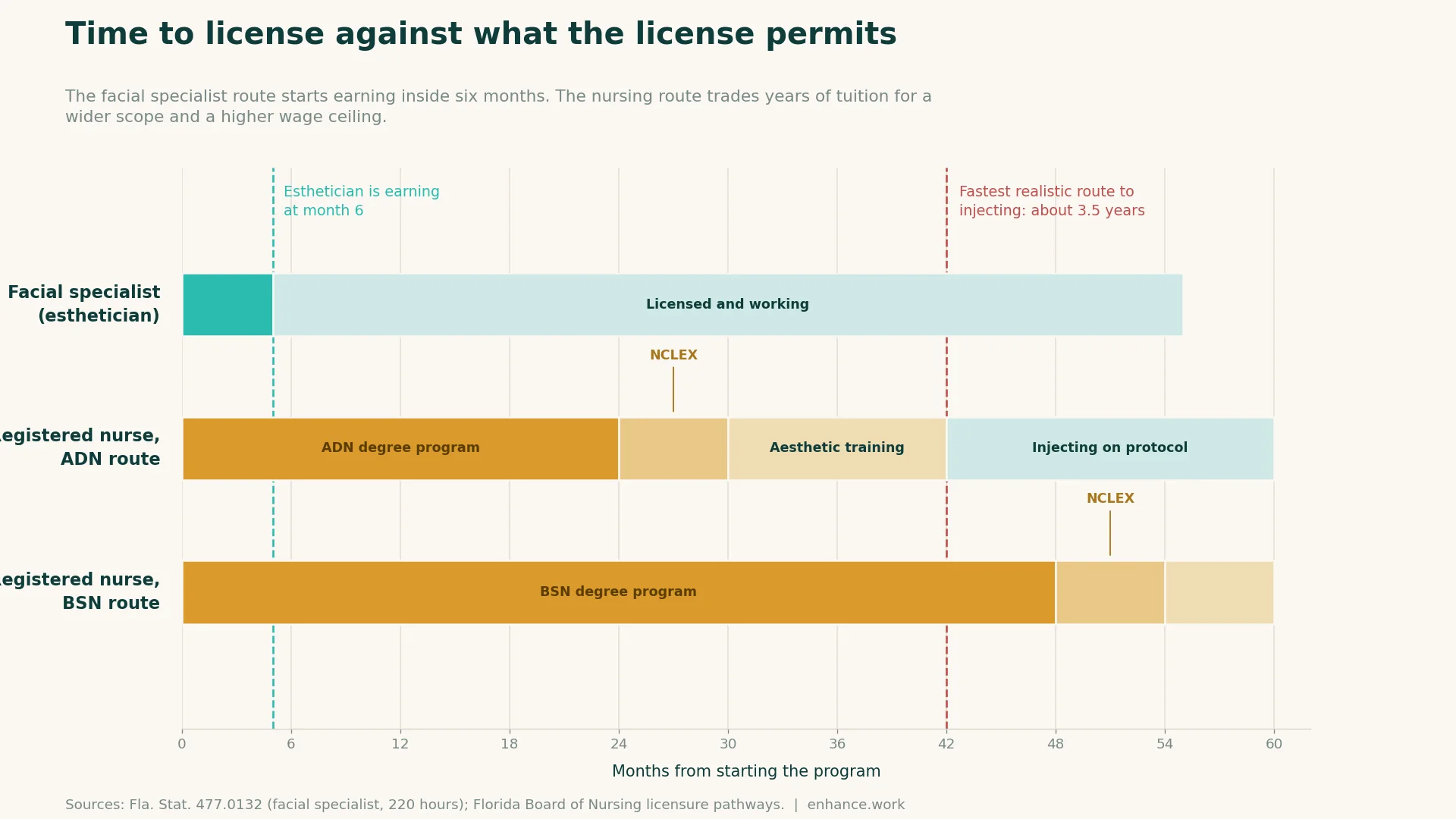
Time to license against what the license permits. The facial specialist earns inside six months.
Can an esthetician become an aesthetic nurse?
Yes, and it is a common sequence. Nursing programs do not credit cosmetology hours, so the degree starts from the beginning. The clinical instinct and the client handling transfer completely, and hiring managers value the combination. The route in reverse is documented in our look at nurses who add an esthetics credential and why the move is less common than the opposite direction.
The dual credential also matters for anyone eyeing the business side. Understanding both scopes is close to a prerequisite for running a clinic, which is why it appears in our guide to who can legally own a med spa in Florida and what the corporate practice of medicine restricts.
What does not work is trying to shortcut the boundary. A certificate in advanced modalities does not let an esthetician inject, and no volume of continuing education changes what the Board of Cosmetology licensed you to do.
Where the esthetician vs aesthetic nurse comparison breaks down
Three places, and each one trips up people running the comparison for the first time.
The titles are not protected the way you assume. Medical aesthetician and clinical skincare specialist are marketing labels rather than licenses, and Florida issues neither, a point we document in our explanation of what a medical aesthetician actually is and why no state issues that license. Master esthetician is different. Florida does not issue it. Utah, Virginia, Washington and the District of Columbia do, and four more states license the same second tier as advanced, as our breakdown of which eight jurisdictions actually license a second esthetics tier and what it adds sets out. When a job post advertises any of these titles, read the scope described in the listing, not the title on it.
Setting changes the job more than the license does. A facial specialist in a dermatology practice runs a different day than one in a resort spa, even holding the identical registration. The same is true on the nursing side, where an injector in a high volume clinic and one in a boutique practice share a license and little else.
The comparison is not permanent. Treating esthetician vs aesthetic nurse as a fork with one irreversible choice is the most common error. It is a sequence for a lot of people: license fast, work in the field, learn whether the clinical side is genuinely what you want, then commit the years to nursing with actual evidence instead of a guess.
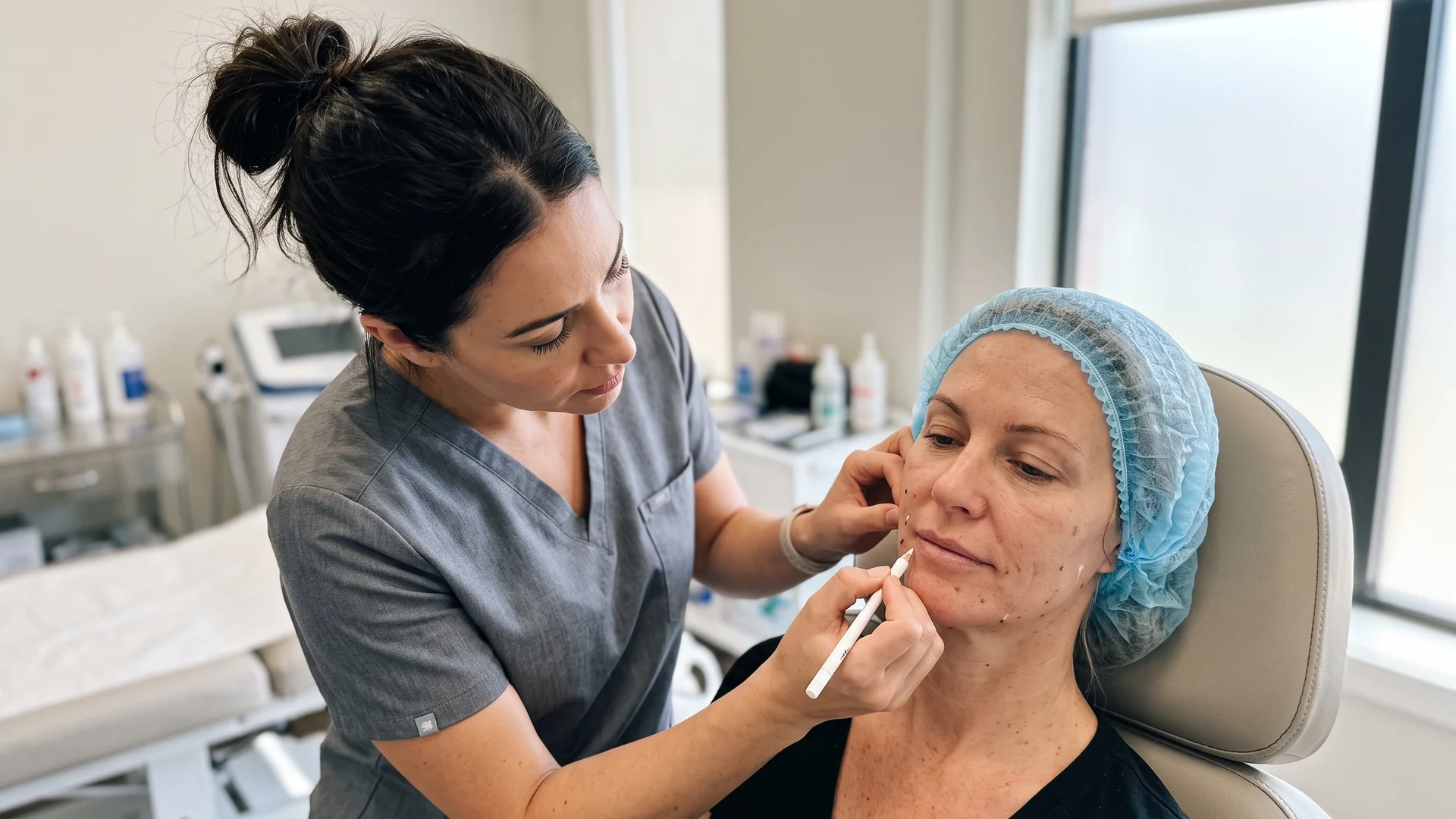
The aesthetic nurse works through the skin barrier, under delegation and a written protocol.
Which path should you actually choose?
Answer three questions honestly.
- How much runway do you have? If you need income inside six months, the facial specialist route is the only one of the two that delivers it. Nursing assumes years of tuition and reduced earnings first.
- Do you want the client or the procedure? Estheticians build a book of people who return for a decade. Injectors build a reputation for results. Both are careers; they are not the same daily experience.
- How much regulatory weight do you want to carry? The nursing license comes with a board, a complaint process, and delegated medical liability that follows you across state lines. That weight buys the wider scope. It never comes off.
If you are leaning toward skincare, the practical starting point is our walkthrough of how to become an esthetician in Florida including the facial specialist registration and exam. If you are leaning clinical, start with our overview of how to get into aesthetic nursing and what your license actually allows you to do.
Frequently asked questions
What is the difference between an esthetician and an aesthetic nurse?
An esthetician holds a cosmetology board credential and works on the surface of the skin with facials, exfoliation, extractions, and dermaplaning. An aesthetic nurse holds a nursing license and may work through the skin barrier under physician delegation, including injecting neurotoxin and filler. They are separate professions under separate boards, not two tiers of one.
Can an esthetician become an aesthetic nurse?
Yes, but it means completing a full nursing degree and passing the NCLEX-RN. Cosmetology hours do not transfer toward nursing credit. The clinical judgment and client experience do carry over, and employers value the combination.
Who earns more, an esthetician or an aesthetic nurse?
Aesthetic nurses earn more at the median, largely because injectable services and commission on product carry higher revenue per hour. Estheticians can close the gap through specialization, strong retail attachment, and independent or ownership models, but the employed wage ceiling is lower.
Can estheticians inject Botox in Florida?
No. Injection is a delegated medical treatment outside the cosmetology scope, and no additional certificate changes that. Florida also requires a good faith exam by a physician, physician assistant, or advanced practice registered nurse before injectables.
Is nursing school worth it just to do aesthetics?
It depends on whether you want the license for aesthetics alone or for the portability. Nursing takes years and real tuition, but it opens injectable work, travels across states and specialties, and gives you a fallback the cosmetology credential cannot.
Which path is faster to start earning?
Esthetics, decisively. Florida registers a facial specialist at 220 hours, so most people are working within three to six months. Nursing puts first income two to four years out, before aesthetic training even begins.
Pick the scope, then pick the school
The esthetician vs aesthetic nurse decision is not about which job is better. It is about which boundary you want to work inside, how long you can spend getting there, and whether you would rather own the client or own the procedure.
Both roles are being hired across Florida right now, often by the same clinics. Browse current Florida med spa and aesthetic practice openings on the Enhance.work directory to see what each license is actually being paid and let live postings settle the comparison for you.