Key Takeaways
- Working as an esthetician in a dermatology office needs no special credential. The license is the same one a spa asks for, and in Florida that is the facial specialist registration at 220 statutory hours.
- The schedule is fed by physician referral rather than by marketing, which removes the pressure to fill your own book and replaces it with an expectation that you follow a plan you did not write.
- Treatments skew conservative. Acne management, post procedure recovery, rosacea support, and pigment protocols on patients who are often already on prescription therapy that changes what the skin tolerates.
- Pay is usually salary or hourly with a smaller commission component than a spa. Stability goes up, upside goes down, and benefits are far more common.
- The hiring filter is judgment, not modality lists. Practices screen for documentation discipline, knowing when to stop, and communicating with a physician without either deferring completely or overstepping.
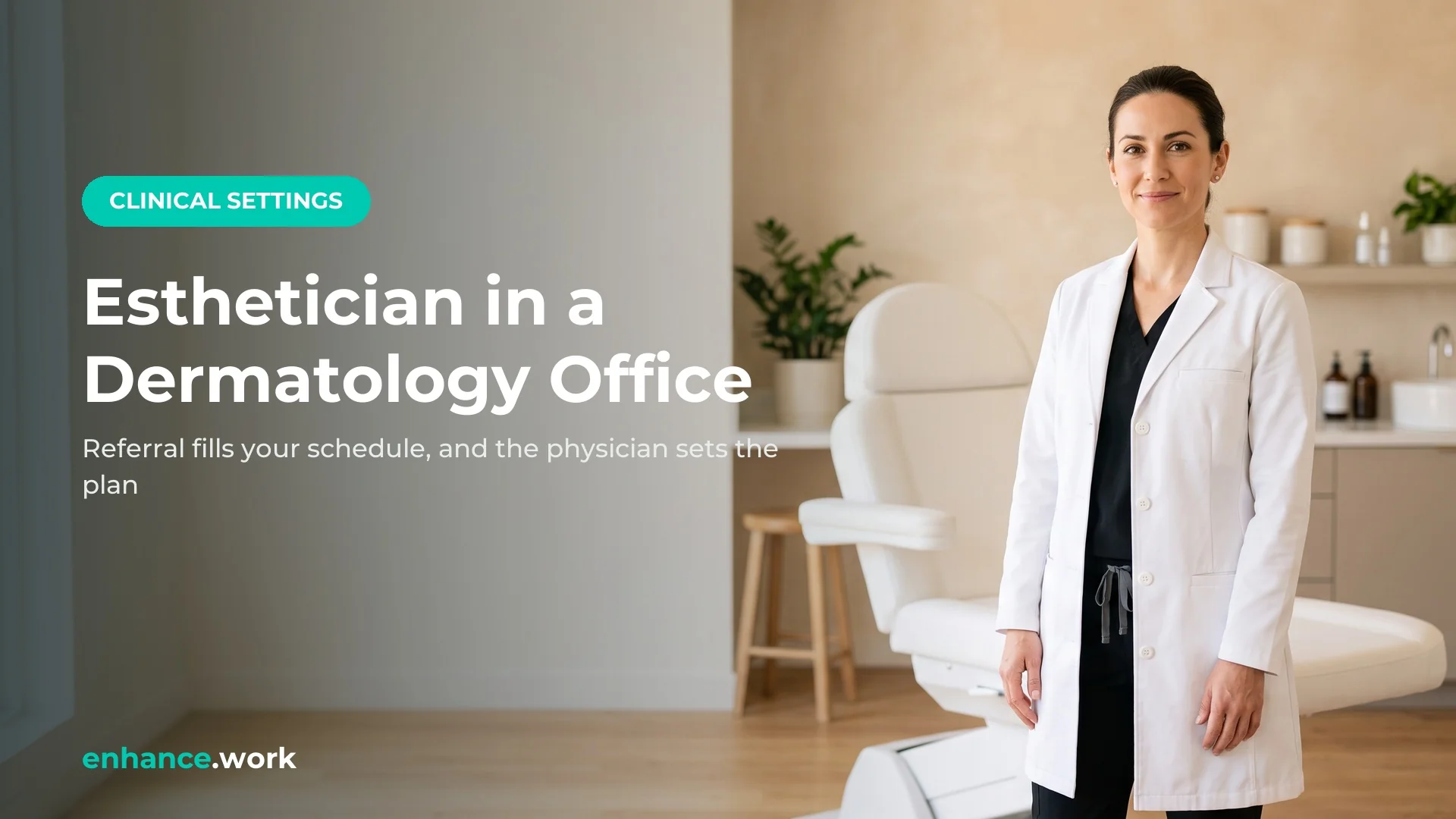
An esthetician in a dermatology office holds the same license as a spa role. Almost nothing else is the same.
The patient in the chair is often already on prescription therapy, and that changes what the skin can tolerate.
An esthetician in a dermatology office looks like a spa role from the outside. Same license, same treatment room, often the same equipment. It is not the same job. People who take one expecting the other rarely last a year.
What changes is where your schedule comes from and who defines success. In a spa you fill your own book and you are measured on rebooking and retail. As an esthetician in a dermatology office, the physician fills your book and you are measured on whether the patient's skin improved and whether your documentation held up.
Here is what the role actually involves, what it pays, and what the practices screen for.
What does an esthetician do in a dermatology office?
Clinical skincare, defined narrowly, on patients who arrived for a medical reason.
- Acne treatment and extraction. Often the largest slice. Patients on topical retinoids, oral therapy, or both, whose skin is barrier compromised and cannot take an aggressive protocol. The skill is calibrating downward.
- Chemical exfoliation within scope. Superficial peels on physician approved protocols, with the depth question settled by the practice rather than by you.
- Post procedure recovery. Supporting patients after laser resurfacing, biopsies, excisions, or Mohs, where the goal is undisturbed healing rather than visible change. The timing boundary is strict, and worth stating plainly. Acute surgical wounds and ablative laser injury need sterile technique and physician follow up. The esthetician does not handle surgical margins, and applies nothing the physician has not prescribed. The work begins after re epithelialization, with barrier support and later cosmetic camouflage.
- Rosacea and barrier repair. Long horizon management, often mostly product and behavior guidance with minimal in room treatment.
- Pigment and photodamage protocols. Especially on darker skin types, where the risk of post inflammatory hyperpigmentation makes conservative sequencing the entire job.
- Patient education and triage. Explaining the physician's plan in language the patient will actually follow, and flagging anything that should go back to the physician before you treat.
What you will not do is inject. That boundary holds identically in a dermatology office and in a med spa, and it is set out in our comparison of the esthetician and aesthetic nurse paths across scope, licensing time, and earning ceiling. Working next to physicians does not extend your scope by delegation the way it does for a nurse.
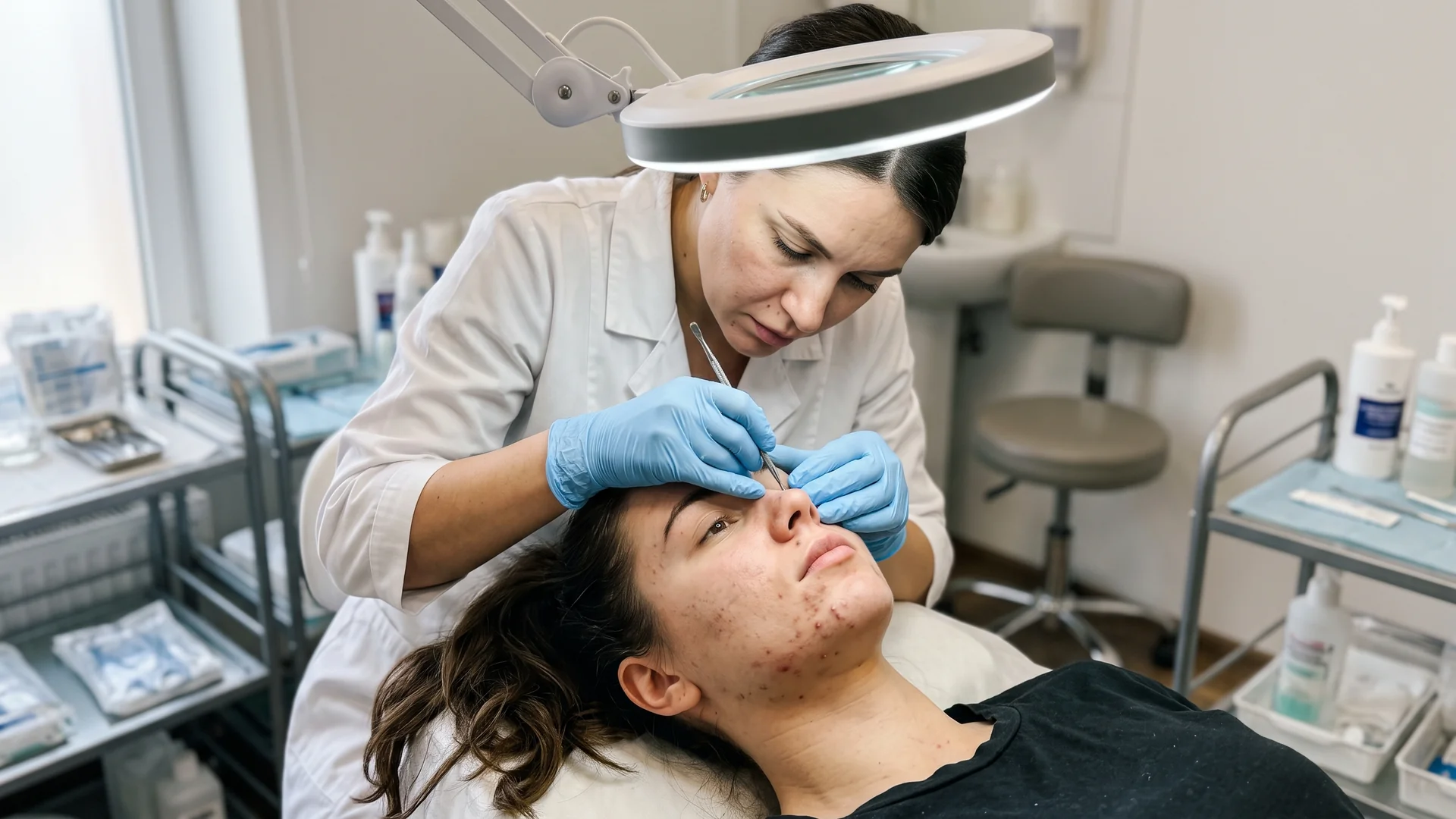
Acne management on patients already on prescription therapy: the skill is calibrating downward.
Does an esthetician in a dermatology office need a different license?
No. The state credential is the same one a spa requires. In Florida that is the facial specialist registration created by Florida Statute 477.0132, explained in our breakdown of what a licensed esthetician is and why Florida registers a facial specialist rather than a general license. No separate clinical license exists, and no state issues the medical esthetician credential that job posts advertise. The Florida Board of Cosmetology lists every skin care credential the state actually grants. That title is not among them, a point we cover in our explanation of what a medical aesthetician actually is and why no state issues that credential.
What differs is what the practice expects you to already know. Wound healing phases. Common dermatologic conditions and their treatments. How isotretinoin and topical retinoids change what skin tolerates. Infection control at a clinical standard. And documentation that survives being read by someone other than you.
Most of that is learned on the job, not taught in a 220 hour program. That is why practices weigh clinical experience so heavily, and why the first dermatology job is the hard one to get.
What does an esthetician in a dermatology office earn compared to a spa?
More stable, less upside, and the structure is the real difference rather than the headline number.
| Factor | Dermatology practice | Traditional or resort spa |
|---|---|---|
| Schedule source | Physician referral, internal | Your own marketing and rebooking |
| Pay structure | Salary or hourly, small commission | Lower base, larger service and retail commission |
| Retail expectation | Present but modest, often physician dispensed | Central to total compensation |
| Benefits | Common, practice runs full payroll | Less common, contractor arrangements frequent |
| Treatment style | Conservative, protocol driven | Broader, result and experience driven |
| Autonomy over plan | Low, physician sets direction | High, you own the plan |
| Income ceiling | Lower and predictable | Higher and volatile |
| Clinical learning | High, daily physician exposure | Variable, depends on the practice |
Florida figures by setting are in our Florida esthetician salary data covering spa, medical, and independent practice settings, and the clinical premium specifically in our medical esthetician salary breakdown showing what the clinical setting adds over traditional spa employment. Do not read the medical premium as free money. You are trading commission variance for a predictable wage, and in a strong retail spa a top performer can out earn the clinical role outright.
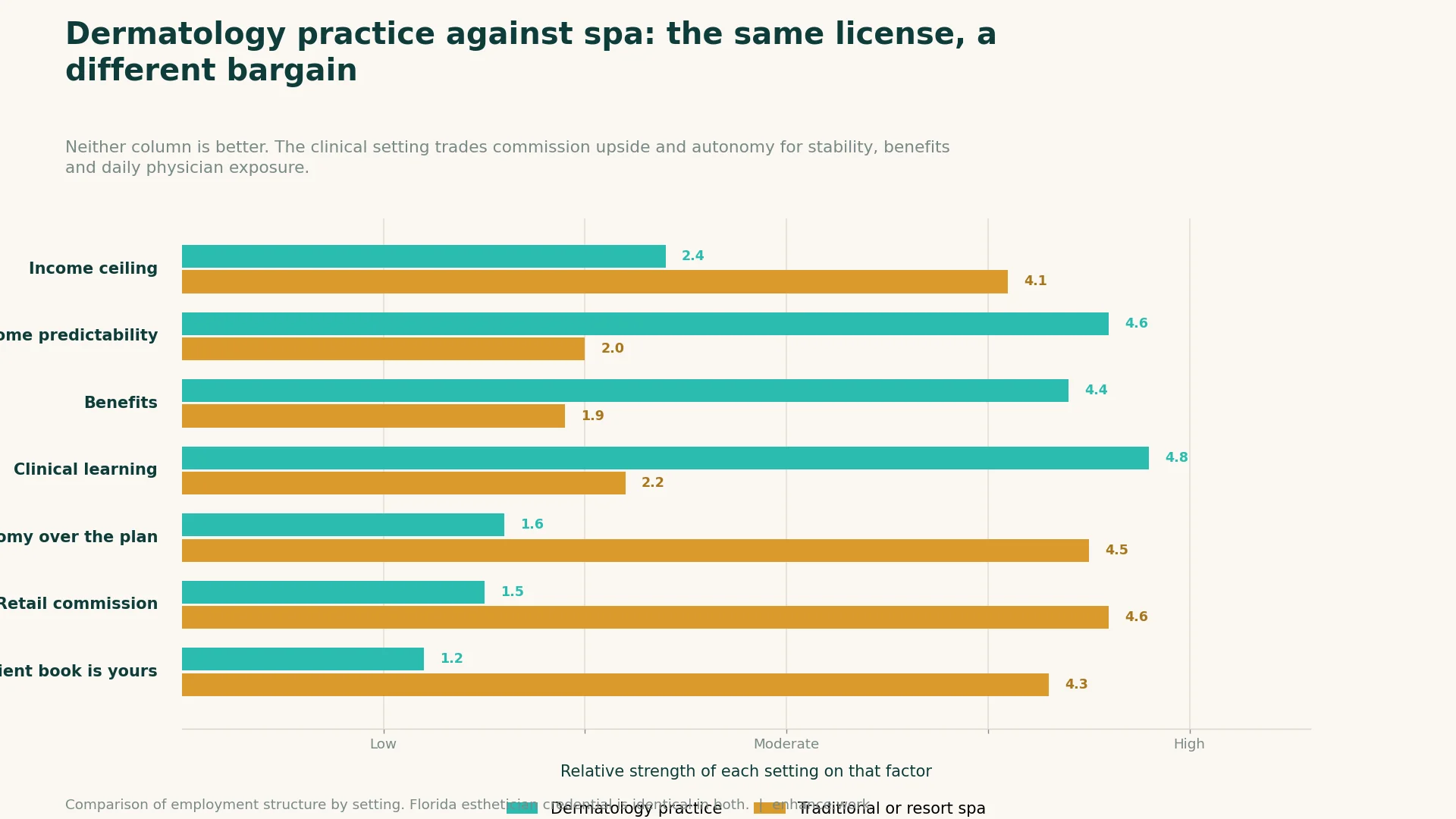
Stability and clinical exposure on one side, commission upside and autonomy on the other.
How do you get hired by a dermatologist?
Differently from how you would apply to a spa, and the differences are what filter most applicants out.
- Lead with judgment, not modalities. A list of machines you have run means little. A short account of a patient you declined to treat and why means a great deal.
- Show clinical vocabulary. If you cannot discuss wound healing phases or explain how a patient on a retinoid should be treated differently, the interview ends early regardless of your experience.
- Bring documentation samples. Redacted treatment notes demonstrate more about your fit than a portfolio of before and after photos does in this setting.
- Expect a working interview. Many practices run one, and they are watching how you handle a patient who is anxious or in discomfort more than they are watching your technique.
- Get the clinical adjacency first. A med spa with genuine medical direction is the standard stepping stone, and the openings are covered in our guide to medical esthetician jobs in Florida and what clinical settings expect from the role.
If you are considering the further clinical end of skincare, dermatology adjacency is also the usual on ramp into paramedical esthetics covering oncology patients, surgical scars, and burn rehabilitation.
What surprises people in the first month
Three things, consistently, from estheticians who make the move out of spa work.
The pace is slower and the notes are longer. You may treat six patients where a spa day held ten, and you will spend real time documenting each one. The note is part of a medical record that another clinician will read, and it is judged accordingly.
You will be told no. A physician will overrule a treatment plan you were confident about, sometimes without a full explanation, because they are looking at a chart you have not read. Estheticians used to owning the plan find this the hardest adjustment. The ones who do well treat it as access to information, not as a challenge to their competence.
The patients are different. Someone whose acne has not responded to two rounds of oral therapy is not arriving relaxed. Neither is a patient two days after a Mohs excision on their face. A meaningful share of the job is managing worry, and nothing in a 220 hour program prepares you for that part.
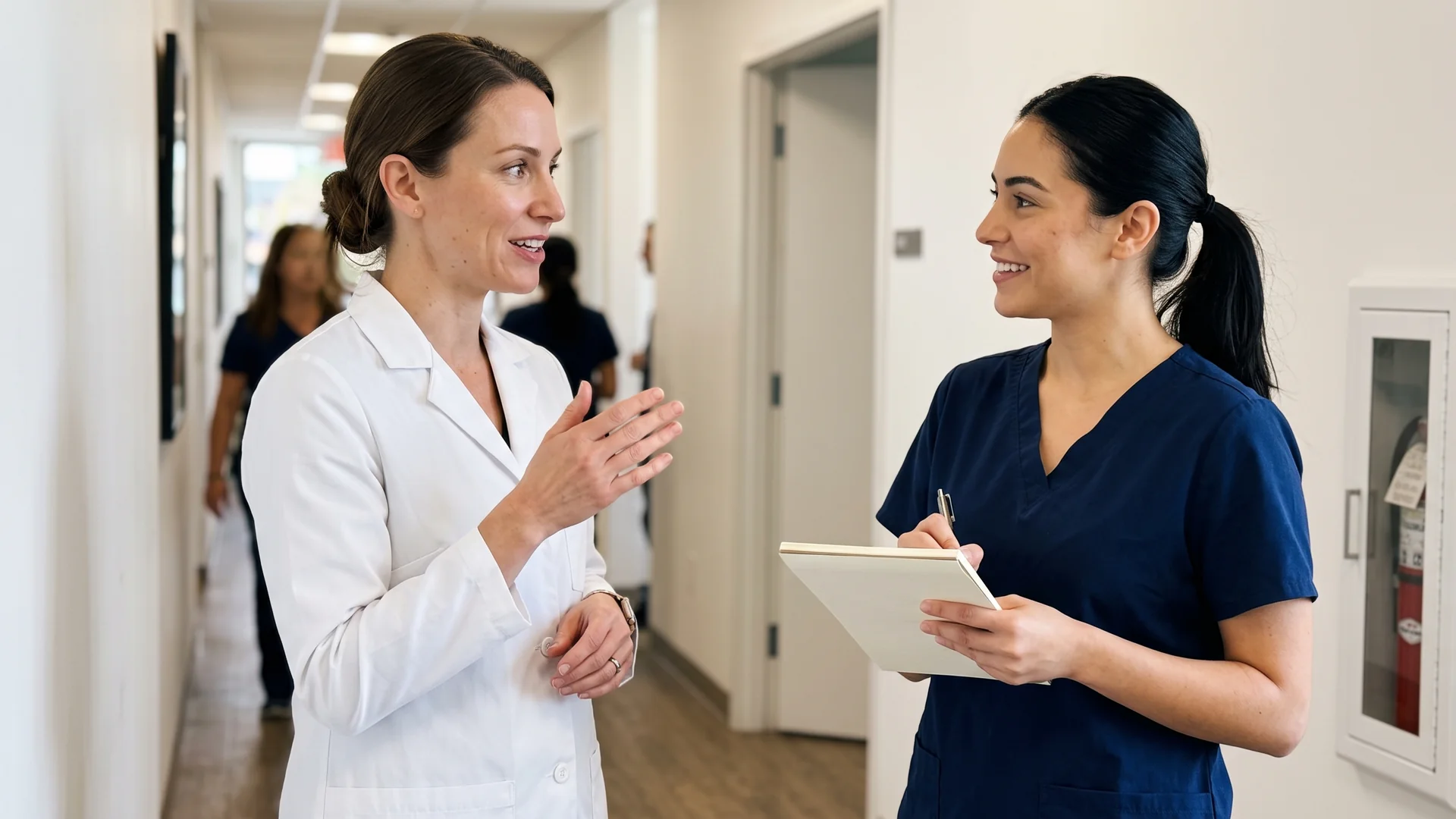
The physician sets the direction. Being overruled is access to information, not a challenge.
Who is this setting actually right for?
It suits estheticians who would rather be right than busy. You will treat fewer patients, more carefully, with less creative latitude, and you will learn more dermatology in a year than in five years of spa work.
It does not suit someone who wants to build a personal brand and a following. The patients belong to the practice, the plan belongs to the physician, and if you leave, the book does not travel with you. That is a genuine cost, and it is worth pricing before you take the role.
It is also worth understanding how the practice sees the position. Clinical support roles that get treated as interchangeable turn over fast, for reasons we set out in our analysis of why aesthetic practice turnover is so expensive in Florida and what actually keeps clinical staff. In the interview, ask how long the last person in the role stayed.
Frequently asked questions
Do dermatologists hire estheticians?
Yes, routinely. Dermatology practices employ estheticians for acne management, superficial chemical exfoliation, post procedure recovery, rosacea and barrier support, and pigment protocols, usually on patients referred internally by the physician.
What does an esthetician do in a dermatology office?
Clinical skincare on patients who came in for a medical reason: acne treatment and extraction, physician approved peels, post procedure care after lasers or excisions, rosacea and pigment management, and patient education on the physician's plan.
Do you need a special license to work in a dermatology office?
No. The state credential is the same one a spa requires, which in Florida is the facial specialist registration. Practices expect additional clinical knowledge, but it is not a separate license and no state issues a medical esthetician credential.
Is working for a dermatologist better than a med spa?
It depends what you want. Dermatology offers stability, benefits, physician referred patients, and far more clinical learning. Med spas offer higher commission upside, more autonomy over the treatment plan, and a book of clients that is more genuinely yours.
How much does an esthetician make in a dermatology office?
Typically salary or hourly with a modest commission component, so the base runs above a comparable spa role while total earnings for a high performing retail esthetician can be lower. Benefits are far more common in the clinical setting.
Can an esthetician in a dermatology office do injections or lasers?
Injections, no. Working alongside physicians does not extend an esthetician's scope. Laser and energy based device use is also outside it in Florida. Class IIIb and IV lasers and intense pulsed light for aesthetic or dermatologic treatment are not authorized by a facial specialist registration alone. Under Florida Administrative Code chapter 64B8-56, the Electrolysis Council rules covering laser and light devices they require medical or nursing credentials, or a certified electrologist holding the laser endorsement, working under a protocolized physician supervision arrangement. Working inside a dermatology practice does not change that.
Trade the book for the training
Working as an esthetician in a dermatology office is a specific bargain. You give up autonomy and commission upside. You get stability, benefits, and a year of clinical education that no course sells. For someone aiming at the medical end of skincare, that trade is usually worth making early.
Florida dermatology practices and medically directed clinics hire this profile continuously. Browse Florida clinical skincare and medical esthetics openings on the Enhance.work directory to see which practices are hiring right now and find the setting that matches the career you are building.