Key Takeaways
- A paramedical esthetician is defined by the patient in the chair, not by the procedure on the menu. The work is compromised skin: oncology treatment, surgical scars, burns, grafts, chronic conditions, and post procedure recovery.
- No US state licenses a paramedical esthetician. Florida registers a facial specialist at 220 statutory hours, and the paramedical layer is post licensure training on top of that registration.
- The specialty inverts the usual esthetics instinct. Most clinical work here is about doing less, more carefully, on skin that cannot tolerate a standard protocol.
- Oncology esthetics is the fastest growing entry point, driven by cancer centers recognizing that skin toxicity from radiation and targeted therapy needs managed care rather than a retail facial.
- Employers are hospitals, cancer centers, plastic surgery and dermatology practices, and burn or wound programs. Screening is for judgment and documentation discipline, not for a certificate count.
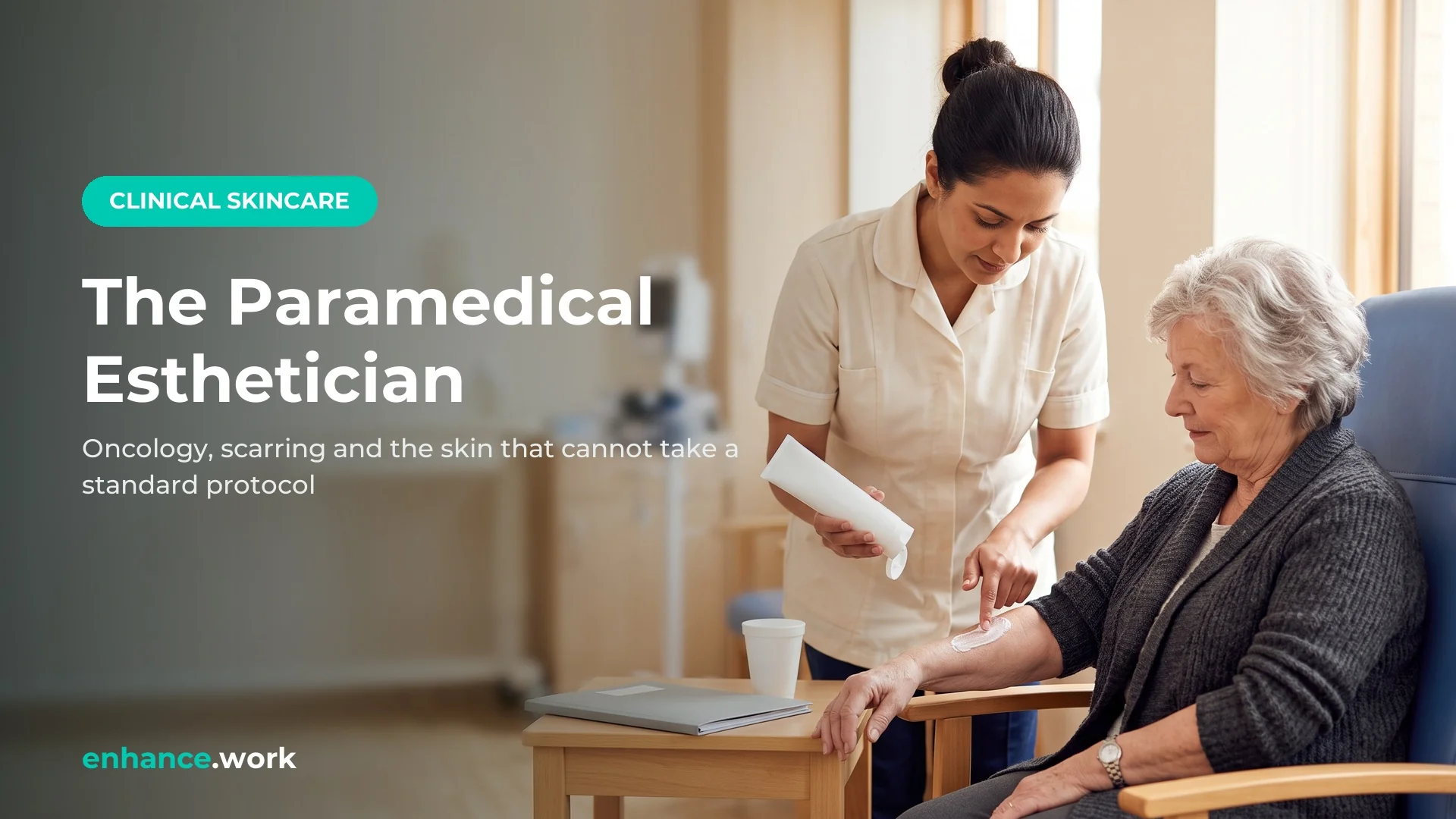
Paramedical esthetics is defined by the patient, not the procedure.
The specialty is defined by whose skin you are treating, not by which machine you are holding.
A paramedical esthetician is not organized around procedures the way most skincare careers are. You learn a modality, you get good at it, you build a book. Paramedical esthetics is organized the other way, around a patient population, and the procedures follow from what that population can safely tolerate.
A paramedical esthetician works with skin that is compromised. A patient midway through radiation. Someone eighteen months out from a mastectomy with a scar that will not soften. A burn survivor rebuilding tolerance to touch. A transplant recipient on immunosuppressants whose skin no longer behaves the way any textbook describes.
It is the least glamorous and, by a wide margin, the most durable corner of the field. Here is what the work actually is, what training it requires, and where it is hired.
What does a paramedical esthetician do?
Four bodies of work, with meaningful overlap.
- Oncology esthetics. Supportive skin care during and after cancer treatment. Radiation dermatitis, the sterile papulopustular rash from EGFR inhibitors, severe xerosis, and the skin and nail changes the National Cancer Institute documents as common effects of cancer treatment, plus the loss of barrier function that makes ordinary products intolerable. International supportive care guidance from MASCC and ESMO, whose clinical practice guidelines cover supportive care for treatment related skin toxicity keeps the esthetician's role narrow: bland hydration and photoprotection, prescribed or validated by the treating team. Unapproved cosmeceuticals can worsen inflammation or interfere with radiotherapy, so the working skill is withdrawing actives and escalating, not selecting treatments independently.
- Scar and post surgical care. Working with plastic surgeons and dermatologists on surgical scars, keloids, hypertrophic tissue, and grafts. Timing is everything: intervening too early risks the closure, too late and the tissue has already matured.
- Burn and trauma rehabilitation. Long horizon work on pliability, sensitivity, and the psychological side of touch tolerance, typically inside a multidisciplinary program rather than a spa.
- Camouflage and restorative technique. Corrective pigment work and, where separately trained and permitted, areola restoration after reconstruction. The scope question here is real and state specific, so verify before advertising it.
Cutting across all four is the part nobody advertises: documentation, communication with the treating physician, and the discipline to decline a treatment. In this specialty, the decision not to treat is a clinical decision, and it is the one that keeps patients safe.
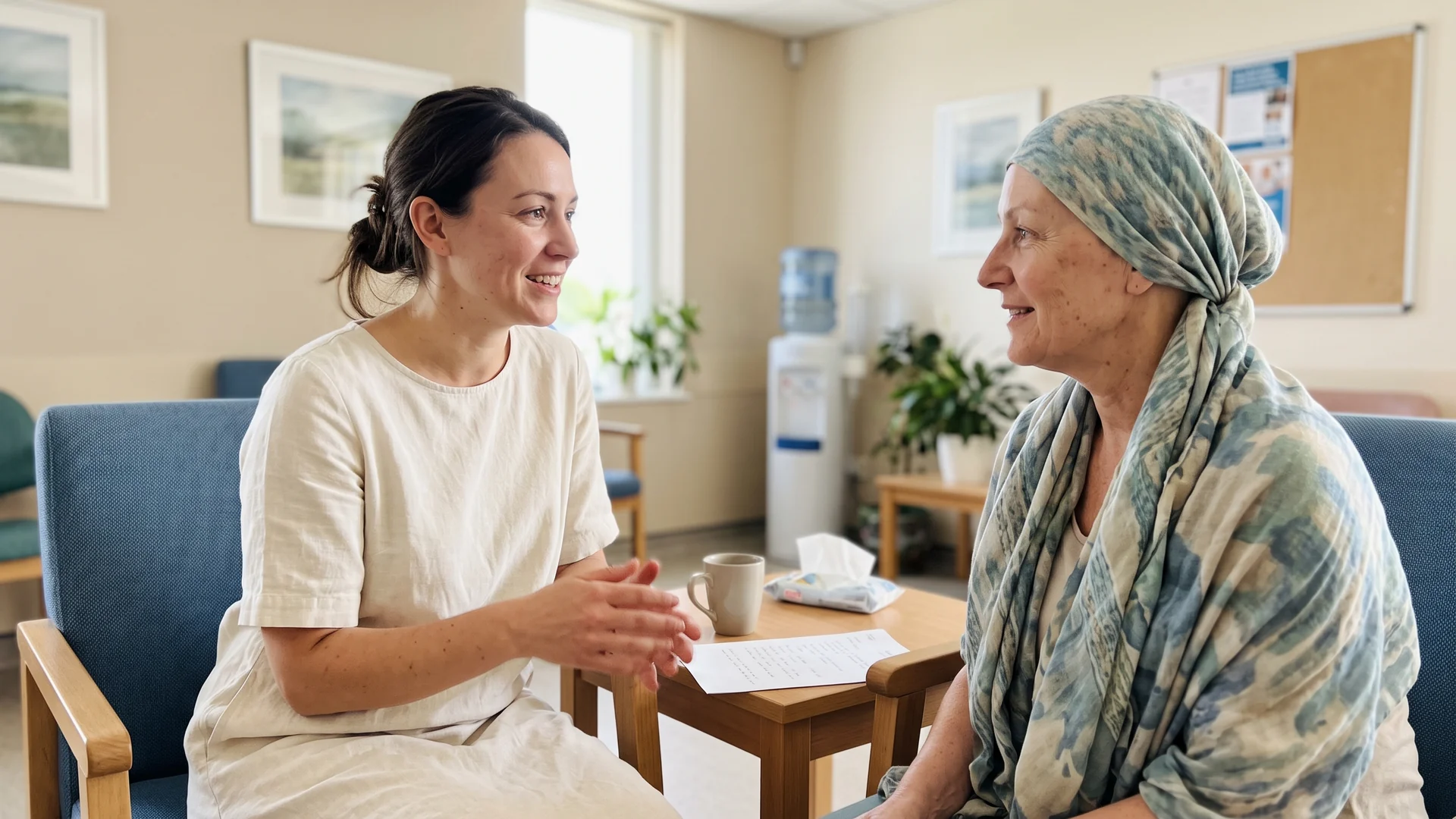
A paramedical esthetician in oncology spends the visit on assessment, withdrawal of actives, and education.
Is paramedical esthetician a license?
No. It is a scope of practice you build on top of a license the state does issue, and the distinction matters because the title is used loosely in job advertising.
Florida does not license an esthetician in the general sense at all. Florida Statute 477.0132 registers a facial specialist at 220 statutory hours, which we explain in our breakdown of what a licensed esthetician is and why Florida registers a facial specialist instead of a general license. Every paramedical credential sits on that registration, and none of them widen it.
This mirrors what happens with adjacent titles. Medical aesthetician is not a license either. As documented in our explanation of what a medical aesthetician actually is and why no state issues that credential, neither title is one. Master esthetician is not issued in Florida either, as covered in our look at what master esthetician means and which eight jurisdictions actually license a second tier.
The practical consequence: a paramedical certificate does not authorize anything your underlying registration prohibits. What it does is make you employable in settings that will not hire without it, which is a different and still valuable thing.
What training does a paramedical esthetician need?
The base license first, then a stack of specialty training. The Florida licensing route is in our walkthrough of how to become an esthetician in Florida including the facial specialist registration and the DBPR application.
| Training layer | What it covers | Typical format |
|---|---|---|
| Base state credential | Florida facial specialist, 220 statutory hours | Approved school plus DBPR application, no state exam |
| Oncology esthetics certification | Treatment side effects, contraindications, product withdrawal, safe touch | Multi day course plus case work |
| Scar and post surgical protocols | Wound healing phases, timing, keloid and hypertrophic management | Course plus supervised clinical hours |
| Advanced modality training | Superficial work only. Dermal microneedling and peels past the stratum corneum need medical delegation | Manufacturer or school based |
| Camouflage or restorative pigment | Corrective pigment, areola restoration where permitted | Specialty certification, verify state scope |
| Clinical environment competence | Infection control, documentation, referral thresholds | Employer onboarding, often unwritten |
Oncology esthetics is where most people enter, and it is the layer with the clearest hiring demand. Look for programs that require case documentation, not just attendance. Be skeptical of any curriculum that teaches modalities without teaching contraindications. In this population, the contraindications are the curriculum.
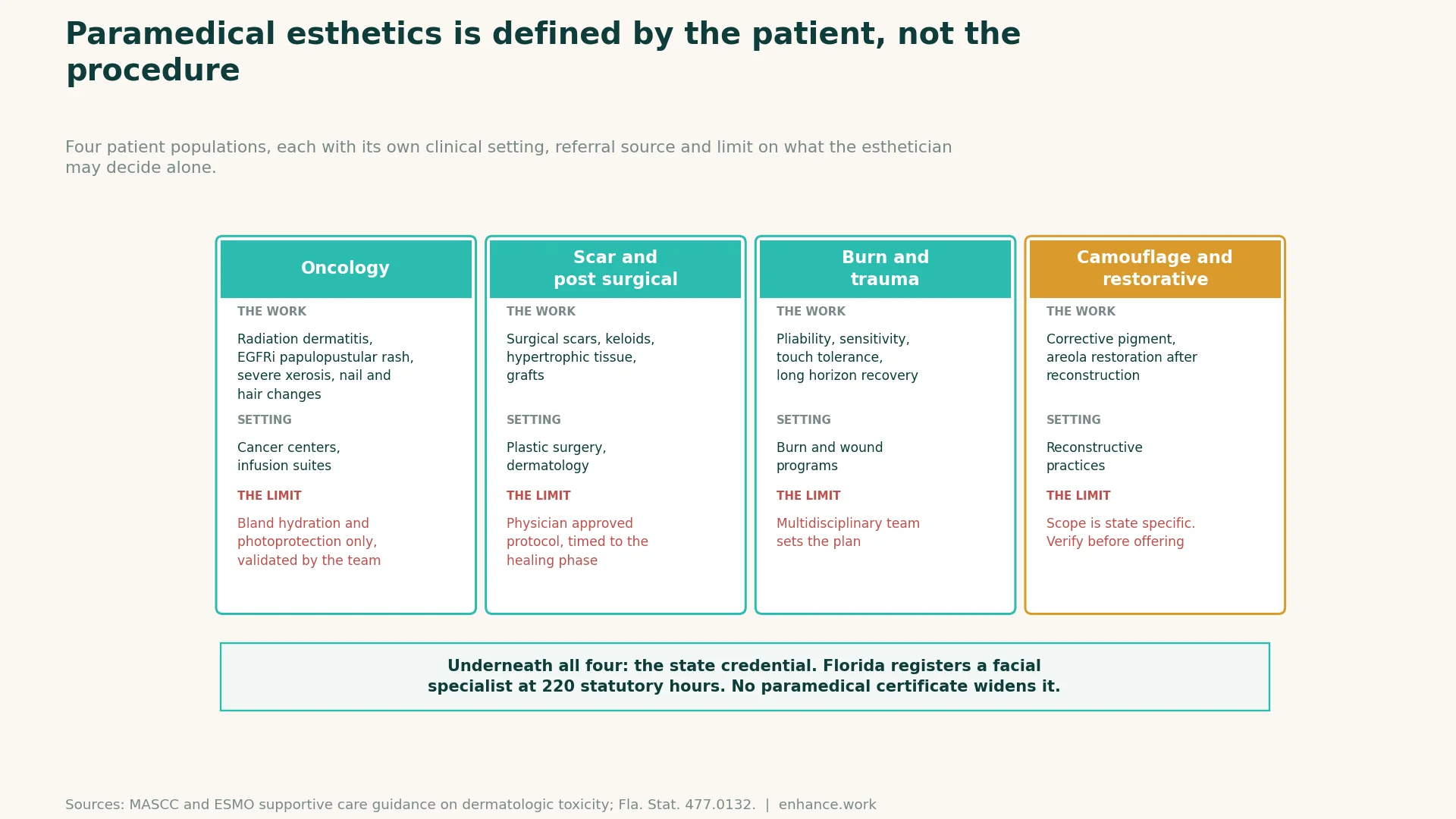
Four populations, four settings, and four limits on what a paramedical esthetician may decide alone.
Where do paramedical estheticians work?
Rarely in a traditional spa, and that is the point. The settings are clinical: cancer centers with an integrative or oncology esthetics program, plastic surgery and reconstructive practices, dermatology offices, and a small number of medical spas with a genuine reconstructive focus rather than a purely cosmetic one. Be realistic about the hospital side. These roles exist but they are not numerous, and the esthetician works alongside the clinical team rather than in place of it. Acute burn care and complex wound management are reserved by law. They belong to physicians and to specialist nurses such as a CWOCN, working within the professional nursing scope defined in Florida Statute 464.003, so the esthetics role in those services is supportive and sits well outside the wound itself.
The dermatology setting deserves a note because it is often the most accessible entry, and we cover its day to day in our guide to medical esthetician jobs in Florida and what clinical settings expect from the role. Hiring managers in these environments screen differently from spas: judgment, documentation habits, and comfort with a patient who is unwell weigh more heavily than modality lists or retail numbers.
Compensation typically follows the medical rather than the spa scale, and the medical premium is quantified in our medical esthetician salary breakdown showing what the clinical setting adds over traditional spa employment. The tradeoff is a smaller retail component, since these patients are not buying serum sets.
What the job looks like on an actual day
Two examples, because the abstract description undersells how different this is from spa work.
A cancer center, mid morning. A patient arrives three weeks into chest wall radiation. The skin is red and tight, and it has begun to break down at the fold. There is no facial in this appointment. You assess the field. You confirm with the radiation oncology team what is permitted and what must be avoided. Then you strip every active from the home routine and rebuild it around barrier repair and a bland occlusive, drawn only from products the team has already approved. Then you teach the patient how to wash without friction and document what the skin looked like so the team can track it. Nothing goes on that skin that the treating team has not validated. The whole visit is twenty five minutes and no machine is switched on.
A plastic surgery practice, afternoon. A patient is nine months post abdominoplasty. The scar is thickened and raised at one end. You work a protocol the surgeon approved and track pliability month over month. You are watching for one moment: the point where a hypertrophic scar stops responding to conservative care and has to go back to the physician for intralesional treatment. Knowing when to hand it back is the skill being paid for.
Neither visit generates retail revenue. Both are billed or salaried differently from spa services, which is why the compensation structure in this specialty looks so unlike the commission model most estheticians know.
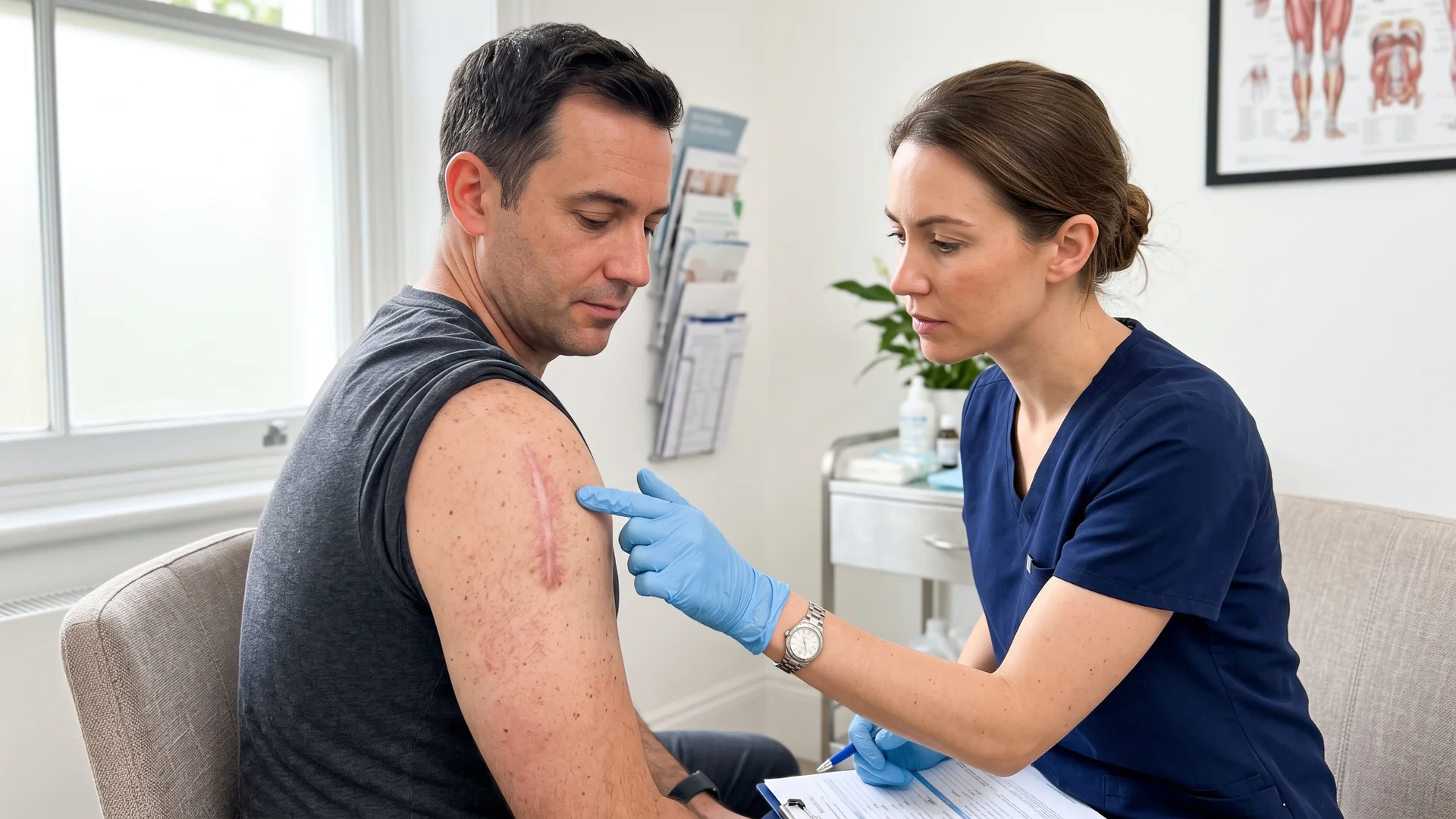
Scar work runs on the surgeon protocol, and knowing when to hand it back is the skill being paid for.
Is paramedical esthetics a good career move?
It is, for a specific temperament, and it is a poor fit for others. Worth being clear about both.
It suits you if the clinical side interests you more than the aesthetic one. It suits you if you are comfortable working alongside physicians and being questioned by them. And it suits you if you can hold a treatment plan that shows its result over eighteen months rather than eighteen minutes. Demand is growing structurally, because survivorship is growing and cancer centers increasingly treat dermatologic toxicity as something to manage rather than tolerate.
It does not suit everyone. Skip it if you want a fast book of loyal retail clients, or if variable commission income appeals more than a stable clinical wage. Skip it too if working with seriously ill patients would wear on you. That last one is not a small consideration and it is the reason people leave the specialty.
For anyone weighing this against the other clinical direction in skincare, our comparison of the esthetician and aesthetic nurse paths across scope, licensing time, and earning ceiling sets out the alternative fork.
Frequently asked questions
What does a paramedical esthetician do?
They treat compromised skin rather than healthy skin. The work covers oncology patients managing radiation and targeted therapy side effects, surgical scars and keloids, burn and graft rehabilitation, and post procedure recovery. It happens alongside a physician, inside a clinical setting.
Is a paramedical esthetician a licensed profession?
No state issues a paramedical esthetician license. It is a specialty built on top of the state credential. Florida registers a facial specialist at 220 statutory hours, and paramedical certifications add employability and competence without widening legal scope.
How do you become a paramedical esthetician?
Earn the state credential first, then add specialty training, most commonly oncology esthetics, followed by scar and post surgical protocols. Clinical experience alongside a physician matters more to employers than the number of certificates you hold.
Do paramedical estheticians work in hospitals?
Yes. Hospital based cancer centers, infusion suites, burn programs, and wound care services all employ them, alongside plastic surgery and dermatology practices. It is one of the few skincare roles routinely hired inside a hospital system.
What is oncology esthetics?
A supportive care subspecialty focused on skin during and after cancer treatment: radiation dermatitis, the papulopustular rash from EGFR inhibitors, severe dryness, nail and hair changes, and barrier loss. The esthetician does not direct treatment. Under MASCC and ESMO, the role is narrow. It is limited to bland hydration and photoprotection that the medical team has prescribed or validated. Unapproved products can aggravate inflammation or interfere with radiotherapy. Most of the training is about what to withhold and when to escalate.
How much does a paramedical esthetician make?
Pay tracks the medical rather than the spa scale, so the base tends to run above traditional spa work, with a much smaller retail commission component. Setting and region drive most of the variation, and hospital roles often add benefits that spa employment does not.
Start with the license, then pick the population
The route into paramedical esthetics is unglamorous and reliable. Earn the state credential. Get into a clinical setting. Add oncology training, and build case experience where a physician can see your judgment.
Florida clinical practices and medical spas are hiring skincare providers with exactly this profile. Browse Florida medical esthetics and clinical skincare openings on the Enhance.work directory to see which practices are hiring right now and find the setting that puts you next to the patients you want to treat.